




Terika has dedicated herself to ensuring that one of American music's most foundational voices is never forgotten, never misrepresented, and never diminished.
About
THE KING OF THE 12-STRING GUITAR
Lead Belly
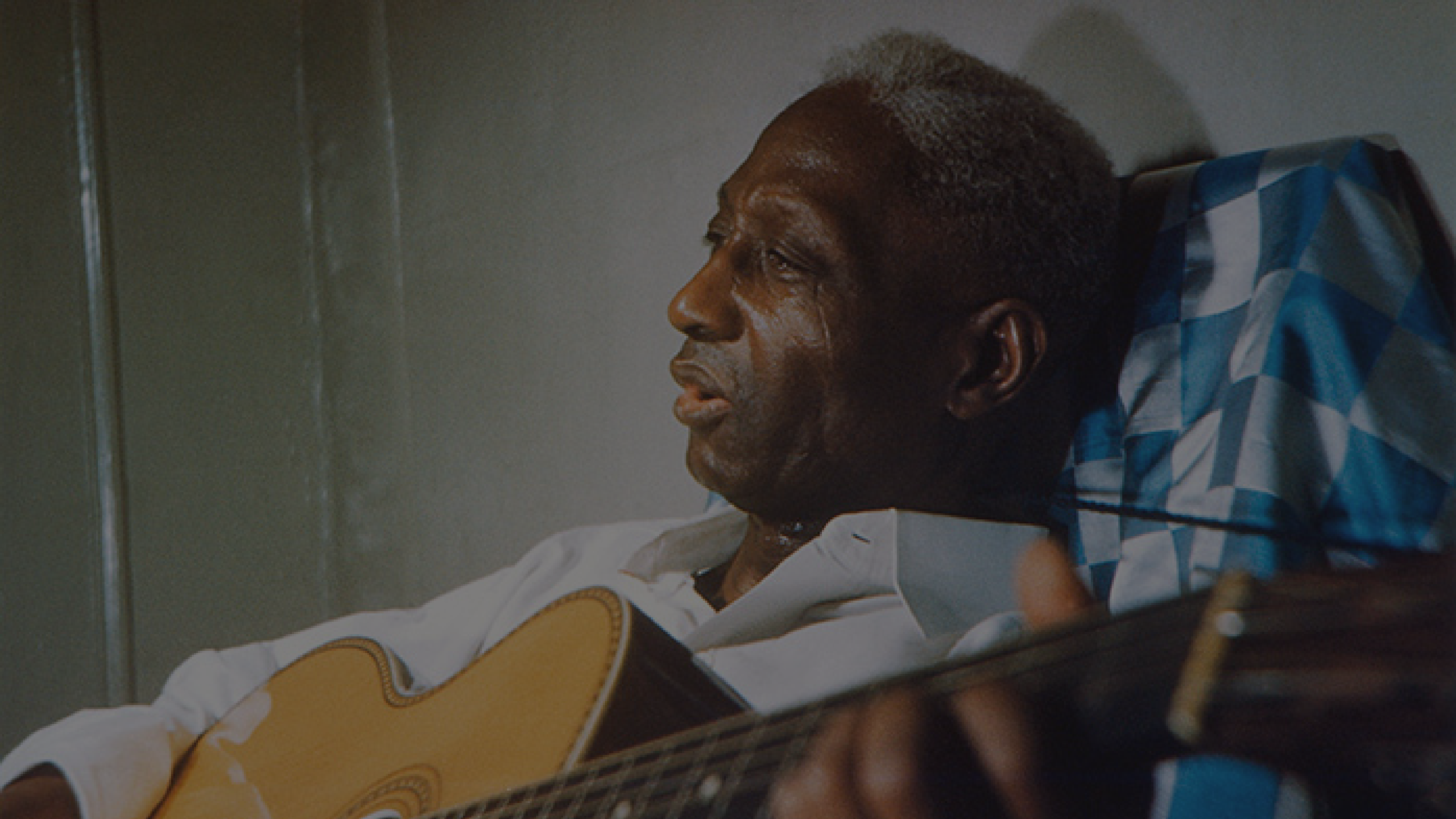
Huddie William Ledbetter
Born January 1888 · Mooringsport, Louisiana · Died December 6, 1949 · New York City
Born on the Jeter Plantation near Mooringsport, Louisiana, in January 1888, the only son of Wesley and Sallie Ledbetter — a family of sharecroppers who would eventually, against every odd the American South stacked against them, become landowners in Bowie County, Texas.
That detail matters. Huddie Ledbetter came from people who refused to be defined by what the world said they were worth. He spent his entire life doing the same.
The Early Years
By the time Huddie was five, his family had settled in East Texas. By the time he was a teenager, he was already performing — first on Shreveport’s Fannin Street, a stretch of saloons, brothels, and dance halls where every musical tradition of the Deep South collided and merged, and where Huddie absorbed all of it like a sponge. Gospel. Blues. Work songs. Folk ballads. Cowboy songs. Children’s songs. Dance tunes. He learned them all and made them his.
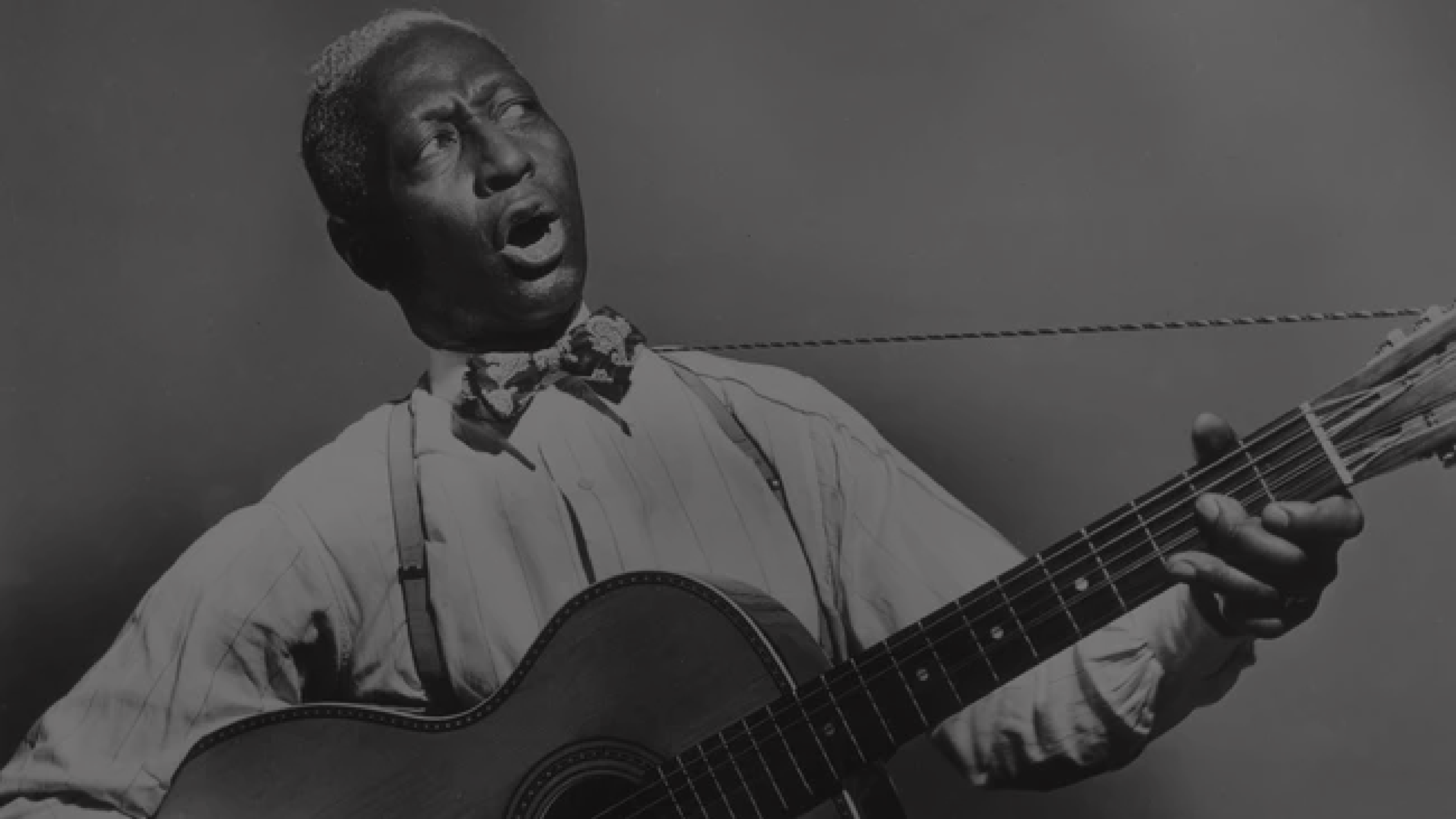
His uncle Terrell gave him his first instrument — an accordion. He moved on to six-string guitar, then to the instrument that would define him: the 12-string Stella guitar, with its doubled strings and thunderous low tunings that made it sound, as one writer put it, like a small orchestra in the hands of one man.
In Dallas he crossed paths with Blind Lemon Jefferson — another musical genius navigating an America that wanted their music but not their dignity. The two traveled and performed together, each shaping the other’s sound in ways that would echo through decades of American music.
The Prisons
Huddie’s road was not a straight one. A man of extraordinary gifts and extraordinary passions, he served multiple prison sentences — in Texas for murder, in Louisiana for attempted murder — on chain gangs and prison farms that were designed, by their very nature, to break men’s spirits and extract their labor without compensation or mercy.
They did not break Huddie Ledbetter.
In the Texas penitentiary he wrote a song pleading for clemency from Governor Pat Morris Neff. Neff — who had publicly promised never to pardon a prisoner — broke that promise and set Huddie free in 1925. The music had done what the law would not.
Five years later he was back in prison, this time at Angola Penitentiary in Louisiana — a prison farm named after a slave plantation, built on land soaked in the history of American bondage. It was here, in the summer of 1933, that folklorists John Lomax and his son Alan Lomax arrived with portable recording equipment and a mission to document traditional American music for the Library of Congress.
They found Huddie Ledbetter. And everything changed.
New York
Released from Angola in 1934, Huddie followed the Lomaxes to New York City — arriving, at the age of 47, into a world that had never seen anything quite like him. He performed at universities, in clubs, on radio. He moved in the circles of Pete Seeger, Woody Guthrie, Sonny Terry, and Brownie McGhee. He recorded for the Library of Congress, for the American Record Corporation, for Folkways, for Capitol Records, for RCA Victor. He appeared on CBS radio. In 1949, he had his own radio program — Folk Songs of America — broadcast on WNYC in New York on Sunday nights.
He and Woody Guthrie were roommates. He performed at Carnegie Hall. He was the first American blues musician to achieve success in Europe, beginning a tour of France in 1949 that illness would cut tragically short.
He never had a commercial hit during his lifetime. The music industry did not know what to do with a man who contained multitudes — who was as comfortable singing a children’s song as a prison ballad, a cowboy song as a political indictment. He dressed in sharp suits and bow ties while the folk revivalists around him wore jeans and work shirts. He called himself by his given name. He was, in every sense, his own man.
The Legacy
Six months after Huddie Ledbetter died of ALS — Lou Gehrig’s Disease — on December 6, 1949, his song “Goodnight Irene” became the first folk song to hit number one on the U.S. music charts. The Weavers’ version sold two million copies. The folk revival of the 1950s and 1960s that followed was built, in no small part, on the foundation he had laid.
The Beatles traced their lineage back to him. George Harrison said it plainly: “If there was no Lead Belly, there would have been no Lonnie Donegan; no Lonnie Donegan, no Beatles.” Kurt Cobain called him his favorite performer and closed Nirvana’s 1993 MTV Unplugged performance with his song. Bob Dylan said a Lead Belly record changed his life. Van Morrison said the British popular music scene of the 1960s would not have happened without him. Woody Guthrie called him the greatest folk singer who ever lived.
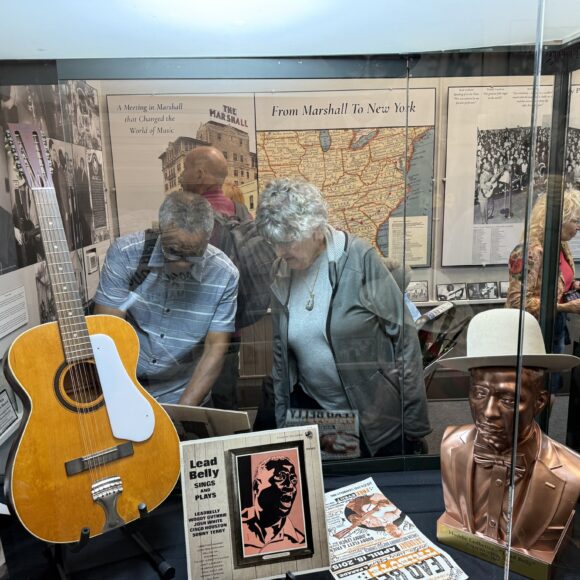
He was inducted into the Nashville Songwriters Hall of Fame in 1980, the Blues Foundation Hall of Fame in 1986, the Rock & Roll Hall of Fame in 1988, and the Louisiana Music Hall of Fame in 2008. A museum dedicated to his Texas legacy opened in Marshall, Texas in 2026 — on the land where his roots run deepest.
His 12-string Stella guitar is considered by many to be the most important instrument of the 20th century.
His niece, Queen “Tiny” Robinson, established the Lead Belly Foundation in his honor. Today his great-great niece Terika Dean and great-great nephew Alvin Singh II carry that mission forward — managing his estate, preserving his archive, and ensuring that the world knows not just his music, but his name.
His name was Huddie.
And this is his house.
LEAD BELLY ESTATE
Family & Foundation

Terika Singh Dean
Co-Manager

Alvin Singh II
Co-Manager
As the great-great nephew of Huddie "Lead Belly" Ledbetter and the grandson of Tiny Robinson, Lead Belly's niece, Alvin carries a connection to his great-great uncle that is both deeply personal and historically significant.